
Prime Minister Narendra Modi celebrated 11 years of the Digital India initiative, highlighting its role in redefining governance, empowering citizens, and accelerating all-round development. He emphasised its impact on digital payments, direct benefit transfers, and expanding digital public infrastructure, making technology a powerful instrument for 'Ease of Living' across India, including tier-2 and tier-3 cities.

A new report, the Digital Credit and Inclusion Index (DCII) 2026, reveals that Tier-2 cities are spearheading digital credit adoption in India. The study, a collaboration between Pahle India Foundation and Amazon Pay, highlights that salaried women are borrowing more than men and that digital credit is primarily used for consumption, with limited productive use.

Uttar Pradesh Chief Minister Yogi Adityanath announced the state's ambitious shift from mobile phone assembly to advanced microchip manufacturing, data centres, and artificial intelligence. He highlighted significant investments and growth in the digital economy, attributing the transformation to the "double-engine government's" alignment with national initiatives like 'Make in India' and 'Aatmanirbhar Bharat'. Adityanath also criticised previous administrations for hindering the state's potential.

Arunachal Pradesh Chief Minister Pema Khandu highlighted that the success of UPI, which handles nearly half of the world's real-time digital transactions, stems from a collaborative ecosystem including financial inclusion, digital identity, and affordable internet. He attributed this digital payments revolution to the vision of PM Narendra Modi.

Experts laud the decision to impose a 0.4 per cent Merchant Discount Rate (MDR) on UPI transactions exceeding Rs 2,000, effective October 15. This move, along with a dedicated fund for small merchants, is seen as crucial for creating a sustainable digital payments ecosystem, incentivising expansion in rural areas, and funding innovation while keeping most transactions free for users.
Minister of State for Telecom Chandra Sekhar Pemmasani urged BRICS nations to collaborate on building institutional capacity and advocating for fair standards in international telecom and ICT bodies. He highlighted India's willingness to share its modular, open-source digital public infrastructure frameworks like Aadhaar and DigiLocker, emphasising their role in sustainable development and economic growth across the Global South.

Population Foundation of India welcomes the digitisation of the Census but emphasises the need for inclusivity, data security, and addressing the under-reporting of women's contributions.
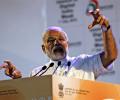
Prime Minister Narendra Modi, at the India Mobile Congress (IMC) 2026, articulated a vision for India's communications sector, emphasizing a global framework to combat cyber frauds and deepfakes. He called for India to become a hub for innovation and product development for the world. Industry leaders lauded his vision, highlighting India's robust digital infrastructure and its journey towards becoming a global technology leader, with a focus on trust, security, and responsible innovation.

Finance Minister Nirmala Sitharaman announced that the Goods and Services Tax (GST) Council's October 7 meeting will focus on 'GST 2.0' process reforms, including e-invoicing and input tax credit rules, while also addressing complex issues surrounding the taxation of the digital economy and cryptocurrency.

A new EY India report highlights how young professionals, women wealth creators, entrepreneurs, ESOP beneficiaries, and digitally active consumers from Tier-2 and Tier-3 cities are fundamentally changing India's wealth ecosystem. This shift is evidenced by increased participation of young and women investors, a rise in disciplined investing via SIPs, and the crucial role of Digital Public Infrastructure in democratizing access to long-term wealth creation. The report predicts over 100 million new investors by 2035.

India has secured a spot among the top 10 leading emerging-market performers in artificial intelligence (AI) readiness, with private investment in AI more than tripling to USD 4.1 billion in 2025, according to a new World Bank report.

J R D Tata, chairman of the Tata group from 1938 to 1991, said that whenever he had to make a difficult decision, he would ask himself, what will be good for India, and what will be good for the Tatas. If he had a doubt, he would decide in favour of India. In the long run, it would turn out well for the Tatas too, he said, points out Arun Maira.

Microsoft has inaugurated its India South Central data centre region in Telangana, marking its fourth cloud region in the country and significantly expanding its cloud and AI infrastructure. This strategic investment supports Telangana's ambitious goal of achieving 5 GW of data centre capacity by 2029 and attracting USD 30 billion in digital infrastructure investments, further solidifying Hyderabad's role as a global technology hub.
Microsoft has inaugurated its India South Central data centre region in Telangana, marking its fourth cloud region in the country and significantly expanding its cloud and AI infrastructure. This strategic investment supports Telangana's ambitious goal of achieving 5 GW of data centre capacity by 2029 and attracting USD 30 billion in digital infrastructure investments, further solidifying Hyderabad's role as a global technology hub.

Jio Platforms Ltd's Rs 30,213-crore initial public offering was subscribed 3.01 times, attracting approximately Rs 66,500 crore in public bids, with qualified institutional buyers oversubscribing their portion by 9.02 times, while retail investor demand remained under-subscribed at 0.68 times.

Andhra Pradesh Chief Minister N Chandrababu Naidu laid the foundation for a USD 15 billion Google Artificial Intelligence data centre near Visakhapatnam, calling it a 'growth engine for India' and Asia's biggest such facility.

Jio Platforms Ltd's (JPL) public offer, valued at Rs 30,213 crore, was fully subscribed within 100 minutes of opening, making it the fastest-ever subscribed IPO in India, driven by strong institutional demand.
Telangana IT Minister D Sridhar Babu stated that Gen Z will be the driving force behind the next wave of AI and green innovation. He urged young innovators to use their skills to solve real-world challenges, particularly in sustainability. The launch of the Green Skills and Applied AI Centre of Excellence in Hyderabad, a partnership between Telangana's IT Ministry, Microsoft, 1M1B, and MeitY Startup Hub, aims to equip graduates with industry-relevant skills in AI, green pharma, solar energy, EVs, and wind energy, with 100 job offers already announced.

Jio Platforms Ltd's Rs 30,213-crore initial public offering (IPO) has garnered bids worth Rs 3.73 lakh crore, achieving a subscription rate of 5.57 times the shares on offer, driven by robust institutional and anchor investor demand.

Suzuki Motor Corporation is set to revolutionise its operations by halving vehicle development times and significantly boosting efficiency by 2030, while committing to a diverse multi-powertrain strategy that includes BEVs, hybrids, and carbon-neutral fuels.

A new report indicates India has become the world's fifth most digitalised economy and ranks fourth globally in AI performance, driven by increasing AI adoption and a strong digital infrastructure.
Microsoft has inaugurated its India South Central datacenter region in Telangana, marking its fourth cloud region in the country. This expansion aims to bolster India's cloud and AI infrastructure, with Telangana targeting 5 GW of datacenter capacity by 2029 and attracting significant investment in the digital ecosystem.
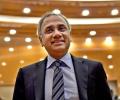
Infosys CEO Salil Parekh stated on Tuesday that the company's AI services, currently contributing over 8% of revenue, are growing rapidly and could account for almost half of its work within two to three years. He highlighted the strong demand for AI services, the company's hiring and training efforts for graduates in AI, and discussed potential risks like infrastructure challenges and societal backlash.

India's Next-Gen GST reforms are proving instrumental in driving robust economic growth, simplifying tax compliance, and fostering a more inclusive business environment across the nation, aligning with the vision of a 'Viksit Bharat', writes Finance Minister Nirmala Sitharaman.

Adani Group Director Jeet Adani and Bharti Enterprises Vice Chairman Rakesh Bharti Mittal highlighted the importance of infrastructure, energy, and connectivity in shaping India's AI ecosystem, emphasising Visakhapatnam's potential as a major digital gateway.

'We see a lot of cases of bank deposits getting lost, especially when people die, so this will help address that because you have one consolidated view.'

The Maharashtra government has approved the deployment of sovereign artificial intelligence solutions from Sarvam AI for its departments, with a two-year outlay of Rs 11.26 crore. This initiative includes the Indus AI workspace for 2,500 users, ensuring government data remains within India, along with citizen outreach agents and speech models for the MahaAI platform.

Arundhati Bhattacharyya, Salesforce President and CEO for South Asia, highlighted how cloud and AI are democratising capabilities, offering India a unique opportunity to leapfrog in the technology revolution. Speaking at the IMC Chamber of Commerce, she emphasised that AI will create more jobs by addressing unmet business demands and could significantly boost India's GDP, with NITI Aayog estimating a USD 500-600 billion addition by 2035. She urged Indian businesses to transform using technology, focus on data, redesign work, and invest in skills, stressing that AI is not just for large corporations.

State Bank of India has launched a suite of AI-powered digital innovations on its YONO platform, enhancing both retail and business banking services. These new features include a 3-in-1 digital onboarding process, a sustainability tracker, integrated trade finance, and an AI virtual assistant, aiming to provide intelligent and future-ready banking experiences for its 53 crore customers.

A NITI Aayog report indicates that India's digital public infrastructure (DPI) initiatives could contribute 4 per cent of the GDP by 2030, a significant increase from the current 1 per cent.
A NITI Aayog report indicates that India's digital public infrastructure (DPI) initiatives are projected to contribute significantly to the nation's GDP, potentially reaching 4 per cent by 2030.

UN Women has issued a stark warning that the rapid advancement of artificial intelligence (AI) is placing women at a higher risk of discrimination and digital violence, citing studies that reveal significant gender bias in AI systems and large language models.

Finance Minister Nirmala Sitharaman has urged the Reserve Bank of India to accelerate its central bank digital currency initiatives, emphasising the need to sharpen capabilities with the digital rupee amidst rapid advancements in tokenisation, agentic AI, and quantum computing. She also highlighted critical concerns regarding cybersecurity, warning that autonomous AI systems are evolving rapidly and require robust safeguards. Sitharaman proposed a federated industry platform to give India's technology ecosystem a collective international voice.

The AIADMK suffered a significant blow in the recent Madurantakam and Dharapuram by-polls, seeing a sharp decline in its traditional vote base. The party came in a distant third in both seats, which were previously its strongholds, raising concerns about its leadership, strategy, and future in Tamil Nadu's political landscape, especially with the rise of the TVK.

RBI Governor Sanjay Malhotra stated that the central bank consistently views fintechs as 'valuable partners' in shaping India's future financial system, crediting the sector with expanding financial inclusion, enhancing customer experience, and streamlining credit delivery, particularly for MSMEs.
BRICS leaders, in their New Delhi Declaration 2026, have called for wider access to Artificial Intelligence resources and stronger international cooperation to ensure the technology is safe, secure, inclusive, and reliable. The declaration outlines a broad technology agenda covering AI, cybersecurity, digital public infrastructure, telecom, quantum technologies, and advanced manufacturing, committing to implement the grouping's statement on 'Global Governance of Artificial Intelligence'.

The National Skill Development Corporation (NSDC), in collaboration with Amazon Web Services (AWS) and Cultus Education, has launched a nationwide initiative to provide cloud and AI skilling to 1.5 lakh learners. This programme aims to equip youth, especially from Tier 2 and Tier 3 cities, with essential technology skills and job-ready training, contributing to India's goal of becoming a global innovation hub.

Arundhati Bhattacharya, Salesforce President and CEO for South Asia, stated that cloud and AI are democratising capabilities, offering India a unique opportunity to leapfrog in technology. Speaking at the IMC Chamber of Commerce, she emphasised that AI will create more jobs and urged Indian businesses to transform using technology, rather than merely digitising. She also highlighted the significant economic potential of AI adoption for India.

If India does get $100 billion a year in FDI, it would be a game-changer in every possible way. FPIs would come rushing back, AI or no AI, points out Debashis Basu.
Union Health Minister J P Nadda has emphasised the need for sound regulation, ethical oversight, and equity in the application of Artificial Intelligence (AI) to healthcare, speaking at the World Health Assembly in Geneva.
